


In San Clemente, an energy-smart pool plan starts with the whole property, not just the heater. Pool circulation, filtration, lighting, spa use, household electrical demand, roof exposure, and coastal weather conditions can all affect the right upgrade path. Before choosing equipment, homeowners should understand how their pool works with the rest of the home.
For homeowners considering solar electric and pool-heating options, low energy pools San Clemente can be part of a practical local planning conversation. Alderete Pools is a California-licensed custom pool and landscape contractor serving San Clemente and communities throughout Orange County, and its home solar electric service focuses on evaluating solar-related options alongside backyard pool and spa needs. That combined perspective matters because collector space, equipment placement, circulation design, and the household’s energy goals should be evaluated together.
Start With the Whole Property
A pool is one part of a larger energy system. The pump moves water; the filter creates resistance the pump must overcome; and heaters, lights, cleaners, and spa features add electrical or fuel demand. An oversized pump, restrictive plumbing, or an aging heater can increase operating costs even if one newer component is installed.
Begin by collecting a year of utility bills, noting equipment ages and recording current pump schedules. Also inspect roof and ground areas, shade from trees or nearby structures, and the condition of the electrical panel. This baseline makes it easier to distinguish among problems caused by heat loss, long pump runtime, old equipment, or the way the pool is used.
Identify the Biggest Sources of Pool Energy Use
Heating is often the largest energy consideration for a pool or spa that is used beyond the warmest months. Water temperature, wind exposure, evaporation, nighttime conditions, and how often the spa is heated all influence the amount of energy required. A pool that loses substantial heat overnight must use additional energy to return to the preferred temperature the next day.
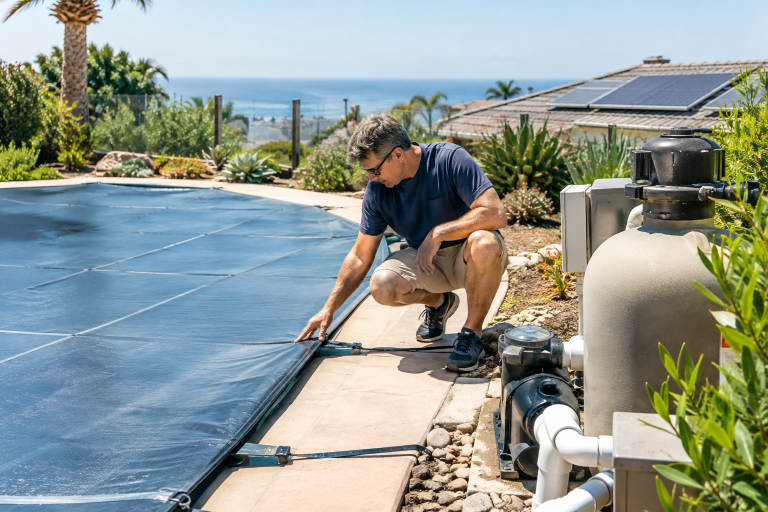
A fitted pool cover should be considered before increasing heater size. Covers help limit evaporation and heat loss, particularly when temperatures fall or wind moves across the water. They can also help keep debris out of the pool, which may reduce the cleaning burden on the circulation system.
Compare Solar Heating, Heat Pumps, and Backup Systems
Solar thermal pool heating circulates pool water through collectors warmed by sunlight. In a sunny San Clemente setting with adequate unshaded collector area, it can be a strong option for extending the swim season with limited ongoing energy input.
Heat pump pool heaters use electricity to move heat from the surrounding air into the water. They can offer useful temperature control when sunlight is limited, when the weather changes, or when a homeowner wants more predictable heating. Their performance and operating cost depend on local conditions, equipment sizing, water temperature goals, and runtime.
- Solar heating may be a good fit for properties with good sun exposure and enough roof, rack, or ground space.
- Heat pumps may suit households that want controlled heating across changing conditions.
- Hybrid systems can combine solar thermal heating with a heat pump when both longer seasonal use and added control are priorities.
Neither approach is automatically best. Pool surface area, desired temperature, spa use, available space, shade patterns, and budget should guide the decision.
Review California’s Pool Heating Requirements
California’s 2025 Energy Code applies to permit applications submitted on or after January 1, 2026. For many new single-family pool and spa projects, primary heating must follow pathways that include solar thermal heating, a qualifying heat pump, on-site renewable or recovered energy, or certain approved combinations. Existing pools, alterations, permanent spas, and site-specific conditions can involve different provisions or exceptions.
Before finalizing a design, review the California Energy Commission’s pool and spa FAQs with the local building department and a qualified contractor. State requirements also address items such as covers for many outdoor electrically or gas-heated pools and spas, circulation controls, pump requirements, and heater-related installation details.
Check the Site Before Choosing Equipment
- Measure the pool and spa surface area.
- Review roof, ground, or rack space for solar collectors or solar electric panels.
- Identify shade from mature trees, chimneys, neighboring homes, and roof features.
- Inspect pumps, filters, plumbing, valves, and equipment pads for age and condition.
- Confirm electrical-panel capacity, permit needs, trenching, structural work, and equipment access.
Improve Efficiency Before Increasing System Size
Efficiency improvements can reduce the heating load before a homeowner invests in larger equipment. Start with a well-fitted cover, clean filters, balanced water chemistry, and plumbing repairs that address leaks or poor flow. Where suitable, a variable-speed pump can operate at lower speeds for routine filtration, while timers and automation can coordinate filtration, heating, and cleaning cycles.
Wind management also deserves attention near the coast. Thoughtful landscaping or screening may reduce direct wind across the water while preserving safe access, drainage, and equipment ventilation. Any changes should be planned so they do not create heavy shade over solar collectors or restrict service access.
Plan for Comfort, Not Just Equipment Ratings
Define what comfort means for the household. Some homeowners want a pool that stays ready for regular swimming over many months, while others want occasional weekend use. Spa needs should be evaluated separately because a spa may require faster temperature changes than a pool. Consider noise, equipment location, appearance, maintenance access, and whether the household values steady water temperature or flexible on-demand use.
Build a Simple Cost and Payback Checklist
- Request estimates that separate required work from optional upgrades.
- Include equipment, installation, permits, electrical upgrades, structural work, and future maintenance.
- Compare expected operating costs under normal pool and spa use.
- Consider the cost of retaining aging equipment versus replacing several connected components together.
- Verify the availability of incentives through current government or utility programs before including them in a budget.
Common Questions Homeowners Ask
Can solar heating work without a pool cover?
Yes, but the pool can lose more heat and water through evaporation, especially overnight or during windy conditions. A cover helps retain the heat the system produces.
Is a heat pump better than solar pool heating?
Not necessarily. Solar may be a good match for an unshaded property with sufficient collector space, while a heat pump may provide more consistent control when weather and use patterns vary.
Can existing pools be upgraded?
Many can, but the pool’s plumbing, equipment space, electrical capacity, roof access, and permit requirements should be reviewed before work begins.
A Four-Week Planning Timeline
- Week one: Gather utility bills, equipment information, and pool-use goals.
- Week two: Review shade, solar access, circulation equipment, plumbing, and electrical capacity.
- Week three: Compare solar, heat pump, and hybrid proposals.
- Week four: Confirm permits, code requirements, installation timing, and written scope details.
Choose a Balanced Energy-Smart Pool Plan
An energy-smart pool in San Clemente does not rely on a single product. The strongest plan combines proper circulation, a reliable cover, sensible controls, well-matched heating, and equipment sized for the property. By addressing efficiency first and comparing options against real household goals, homeowners can improve comfort while avoiding oversized systems and unexpected project costs.
